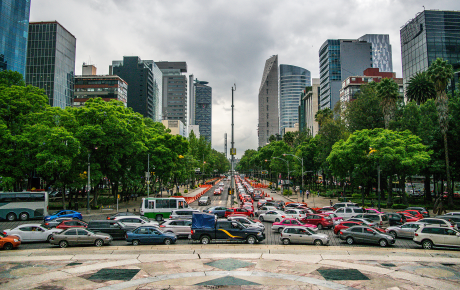


On the 11 June 2026, in the iconic surrounds of the Mexico City Stadium, the 23rd edition of the men’s FIFA World Cup gets underway. Featuring 48 teams playing 104 matches to an expected five million spectators, the World Cup journey will take in 16 venues across the US, Canada and Mexico. But as the largest tournament in the event’s history, this global football celebration will test the host nations’ abilities to put on an event free from security risks at a time of heightened geopolitical tensions.
“The scale of the event is not just focused on stadiums or the accompanying fan zones. Each host country is expected to experience a significant rise in footfall in the period leading up to and including the tournament itself, resulting in an increased exposure to security risks across public transport hubs, airports, hotels and hospitality venues,” says Hiscox London Market’s Terrorism Underwriter, Charlotte Kadir. “The threat of a terror-related incident, as well as other security issues like a malicious attack, strikes, riots and civil commotion, highlights the need for businesses and organisations involved in the World Cup to take additional measures to manage the heightened risk.”
Unrest on the rise
Figures from threat and risk intelligence platform Seerist (see table below) show a marked increase in unrest incidents in most of the World Cup’s host cities over the last year. The upwards trend in unrest events – which Seerist defines as “non-violent or violent mass actions seeking to disrupt and change routine social, government or commercial activities” – was particularly evident in Mexico City but San Francisco and Los Angeles also experienced a significant increase. Only Boston and Toronto have seen an improving security picture in relation to unrest.
| World Cup host city | Verified unrest incidents: March 1 2025 - February 28 2026 | Verified unrest incidents: March 1 2024 - February 28 2025 | Year-over-year change |
|---|---|---|---|
| Boston | 119 | 130 | -11 |
| Toronto | 104 | 110 | -6 |
| Houston | 33 | 33 | 0 |
| Monterrey | 33 | 32 | 1 |
| Dallas | 52 | 45 | 7 |
| Vancouver | 50 | 41 | 9 |
| Philadelphia | 77 | 66 | 11 |
| Miami | 44 | 30 | 14 |
| Seattle | 71 | 54 | 17 |
| Guadalajara | 40 | 20 | 20 |
| Atlanta | 63 | 42 | 21 |
| Kansas City | 45 | 15 | 30 |
| New York City/New Jersey City | 316 | 285 | 31 |
| Los Angeles | 174 | 98 | 76 |
| San Francisco | 216 | 115 | 101 |
| Mexico City | 316 | 195 | 121 |
Source: Seerist
“Incidents of this nature are likely to be one of the major risks at the World Cup,” says Control Risks’ Boubacar Ouane, an Associate Analyst, Geopolitical and Country Risk. “That's relevant for businesses because there's also been an increased targeting of companies by activist groups tied into political issues. Recent US foreign policy actions in respect of Venezuela, Greenland, Cuba and the Middle East are likely to be drivers for protest activity during the competition and may lead to consumer boycotts and activist pressure targeting US brands globally.”
Delayed funding increases risk
A delayed distribution, amid the partial US government shutdown, of US$625 million in additional funds by Congress for US host cities to bolster their security ahead of the tournament, adds Ouane, also threatens to undermine security preparations and make the tournament more vulnerable to disruption.
Reuters reported in mid-April that all funds had now been distributed, but Christopher Tomney, Director of the DHS Office of Homeland Security Situational Awareness, stated: “A lot of the planning efforts underway for the World Cup have been slowed down, have been delayed due to the lapse in appropriations, individuals being furloughed.” In addition, Tomney added the departure of hundreds of security officers from the Transportation Security Administration would be difficult to quickly replace, possibly creating an additional security vulnerability.
Fan violence
An added layer of complexity is the risk of football-related violence. “The organised fan violence that we’ve seen from groups like the ultras in Europe or barra bravas in South America could be exported to the hosting cities. While a great deal of work will have been done in advance to put in place travel bans, this is the type of unrest that the security forces in the US have had little experience of dealing with and could exacerbate existing security concerns,” says Control Risks’ Barnaby Fletcher who leads Control Risks’ risk analysis practice in the US and Canada.
Tournament-related increases in transport and accommodation costs during the event are also likely to be a source of protest in Mexico, given the backdrop of existing housing pressures in some regions. "Protests linked to rising rents have consistently sparked unrest across Mexico City in the past year. We expect that demonstrations during the World Cup will likely centre on these local grievances, particularly anti-gentrification and concerns around urban displacement,” says Ouane.
Search for soft targets
Then there is the increase in malicious attacks which could cause problems during the tournament. “A particular focus for these types of attacks, usually carried out by individuals or small groups, will be the stadiums and other areas of high footfall that may make hotels, bars or restaurants more vulnerable,” says Kadir. “Malicious attacks require limited planning, use simpler methods which can help them to bypass security and, as a result, make them harder to predict and defend.”
It’s a risk that has heightened in recent years, where a perpetrator’s motives can often be confused and sometimes contradictory, adds Fletcher, but it doesn’t mean these attacks are any less devastating. "In the US, you can easily access firearms and you don't need to be particularly experienced to cause potentially huge amounts of damage and loss of life as we saw in the 2017 Las Vegas shooting.” Of course, perpetrators don’t even need a firearm, adds Kadir: “A vehicle used to ram bystanders, or a handheld weapon such as a bladed object can also be just as devastating.”
Lone wolf extremism
Again, as with general incidents of unrest, geopolitical tensions could see a rise in lone wolf actors in the US. “The prominence of lone wolf extremism, particularly inspired by Islamist ideologies, has re-emerged in the past few years, and that could be accelerated by the US involvement in the Middle East and Iran,” says Ouane. While far‑right extremist groups in the US, such as the Oath Keepers and Proud Boys, have seen their capabilities diminish since the Capitol insurrection in January 2021 due to law enforcement action and internal fractures, radicalisation has not disappeared, adds Fletcher.“The Southern Poverty Law Center’s hate map, which tracks far‑right extremist groups, shows the number of groups has increased significantly over the past five years.”
Terror threat
Aside from unrest and malicious attacks, could the 2026 World Cup be vulnerable to a terrorist incident? “High-profile sporting events present an attractive target for terrorists, given the symbolism of striking at a nation's prestige, as well as the potential for mass-casualty attacks,” says Kadir.
For the US, however, a fragmentation of the extremist groups capable of orchestrating such an incident means the risk of a high-severity terror attack is perhaps lower than it has been in the past, says Fletcher. “The chances of there being a sophisticated, high-severity attack by a domestic or transnational group have reduced, especially when we look at transnational Islamist extremism. But, as the recent bomb outside the US embassy in Oslo, Norway by three individuals believed to have links to Iraq demonstrated, there is still the capability to carry out such attacks against western targets. The growth of the use of improvised explosive devices, particularly in the US, should equally not be underestimated.”
Prepare your game plan
Businesses and organisations must plan accordingly. “The World Cup is a high-profile event at risk from a range of security threats. Businesses and organisations must take steps to improve their security measures and develop their incident response and business continuity planning. Then, if the worst happens, they are in a position to minimise the impact of an incident, protect their employees, customers and other stakeholders, and return to ‘business as usual’ as quickly as possible," says Kadir.
Insurance demand rises
Insurance can play a critical role in an organisation’s risk management strategy for the tournament. “We have seen an influx of enquiries from businesses looking for cover relating to the World Cup.
Whether it’s paying out for property damage or business interruption following a terrorist attack, or a public protest that turns violent, we have the ability to work on bespoke solutions to help businesses protect both their balance sheet and fulfill their duty of care to their employees in areas like the provision of counselling and enhanced post-incident care,” concludes Kadir.