
A grid fit for the future: how the London insurance market is helping nations to rewire their power systems


The UK is undergoing the most significant upgrade of its national grid since the 1960s. Over the next five years, more than £10 billion will be spent on the country’s high voltage electricity network as the infrastructure adapts to the growing use of renewables, which have transformed how and where power is generated. “We’re rapidly moving from a world where we had fewer points of power generation – from large power plants such as coal, gas and nuclear – to a place where there are millions of renewable projects feeding into national grids,” says Hiscox London Market’s Louis Cozon, Power and Renewables Line Underwriter.
“To harness this new source of power and meet the growth in demand for electricity,” Cozon adds, “national grids are making record investments in their infrastructure and insurance is already playing a critical role in facilitating that investment. Whether it’s the development of offshore cabling or new substations, insurance is needed at every stage of grid development and operation. For the London insurance market, it represents a big opportunity to innovate and support global projects.”
Grids under scrutiny
A national grid doing its job well is largely ignored by the public. When switching on a kettle or plugging in an electric vehicle, many will give little thought as to how that electricity arrived at the point of use. But when things go wrong, the pylons, cabling, substations, transformers and power stations that combine to form the grid come under intense scrutiny. Spain and Portugal, for example, were hit by a grid outage in April 2025, leaving much of the region in darkness, paralysing transport systems, closing businesses and sending school children home early. A report into the outage found that the grid did not have enough voltage control capability, or more simply, there were not enough measures in place to keep voltage spikes in check which then triggered multiple shutdowns across the network.
Another recent grid failure, although this time due to an ageing transformer catching fire at a substation, saw planes at Heathrow Airport in the UK grounded for a day, as well as the local hospital and thousands of homes and businesses left without power.
Let’s connect
It is failures like these that make building adaptability and resilience into national grids, while meeting the escalating demand for electricity as economies transition to a carbon-neutral future, so critical. One point of focus as more sources of renewable energy come on stream is on the construction of interconnectors. These are “high voltage land and subsea cables that connect the electricity systems of neighbouring countries” and help regulate the supply of electricity, and “enable surplus clean energy to be traded and shared between countries and help manage surges in demand”. But installing high voltage cables, especially under deep sea waters, is not an easy proposition; they can be subject to a range of risks, ranging from damage when they're being installed to manufacturing defects, supply chain factors or environmental issues. “Building a new offshore interconnector network is a complex, technically challenging project,” says Cozon. “Safely installing cables offshore for mile after mile, in hostile conditions, without any disruption or breakage is challenging work.”
High voltage
The challenges associated with interconnectors are not limited to these systems but also apply to the high voltage subsea cables used to export renewable power from offshore wind farms back to shore (also known as export cables). A noteworthy development in this area is that historically, most offshore wind farms have used high voltage alternating current (HVAC) export cables because they are a more cost-effective solution over shorter underwater distances. However, HVAC export cables are not great at long distance power transmission underwater, which is why, as wind farms move further offshore, the industry is shifting from HVAC to high voltage direct current (HVDC) export cables to achieve more efficient power transmission. “The trend towards HVDC, although a mature technology in itself, is relatively new for offshore wind but offers advantages when transmitting power over long offshore distances,” says Hiscox London Market’s Martin Joseph, Power Generation Engineer.
Given the industry’s relatively short track record with HVDC in offshore wind applications, the long-term loss profile is still emerging. “That said, stronger cable risk management can help mitigate potential losses,” says Joseph. “For example, when suitable monitoring techniques are applied during construction, this could help identify certain issues earlier which can then be resolved at a lower cost.”
More than just cables
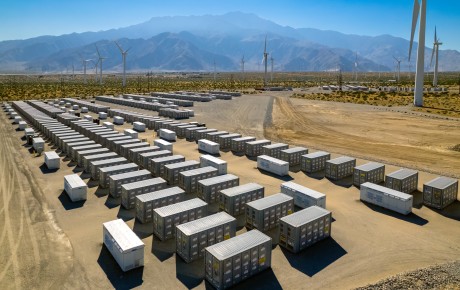
Subsea cables are just one element when it comes to the renewal of national grids, with investment needed in other areas to adapt to the changing profile of power generation. "Grid inertia is critical for the stability of national grids," says Joseph. "Traditional power plants provide this inertia through their heavy, rotating turbines whose spinning mass naturally resists and dampens sudden changes in the grid frequency. Renewables, such as wind and solar, do not inherently provide the same form of physical inertia, so grids must insulate themselves from rapid changes in frequency through the use of other equipment, such as synchronous condensers, which can help stabilise the frequency and support voltage control.” Renewable projects can also support grid stability through advanced control systems that respond rapidly to changes, however, this does require additional investment from the project developers.
Insurance support
Insurance has a critical role to play in supporting the use of these new and adapted technologies, and underpinning the investment made in the renewal of national grids from construction to operation. But is it a risk that the insurance market is happy to take? Given the sheer scale of national grid investment worldwide, with the International Energy Agency estimating that spending will need to rise by 50% by 2030 from today’s US$400 billion, the opportunity for insurers is clear. “London has always been a home for new and developing risks and we’re excited by the opportunity offered by the renewal of national grids as part of the global energy transition,” concludes Cozon.